CHEK News - Vital People Feature

MOVE Adapted Fitness was featured on a special segment, called Vital People, on CHEK News! The video featured our Executive Director, and two of our members, who shared their story and what MOVE means to them.

The news article highlights our annual fundraiser, MOVE the Distance, and shares with the public how the funds raised will go towards supporting our community with accessible and therapeutic exercise through MOVE’s specialized adapted fitness facility!

Click the following link to read, and watch, the amazing feature from CHEK News!

CHEK News Link

Subsidy Programs

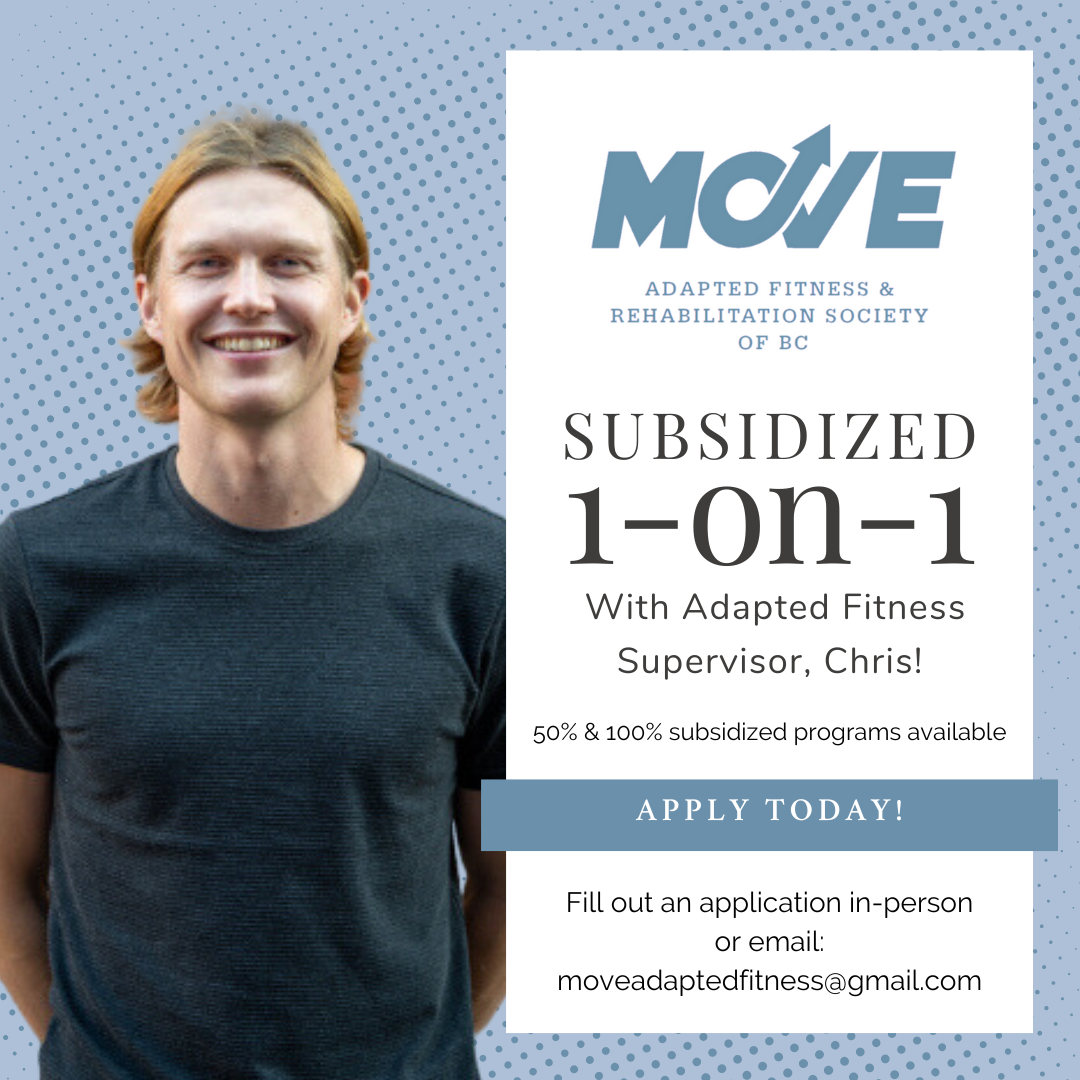
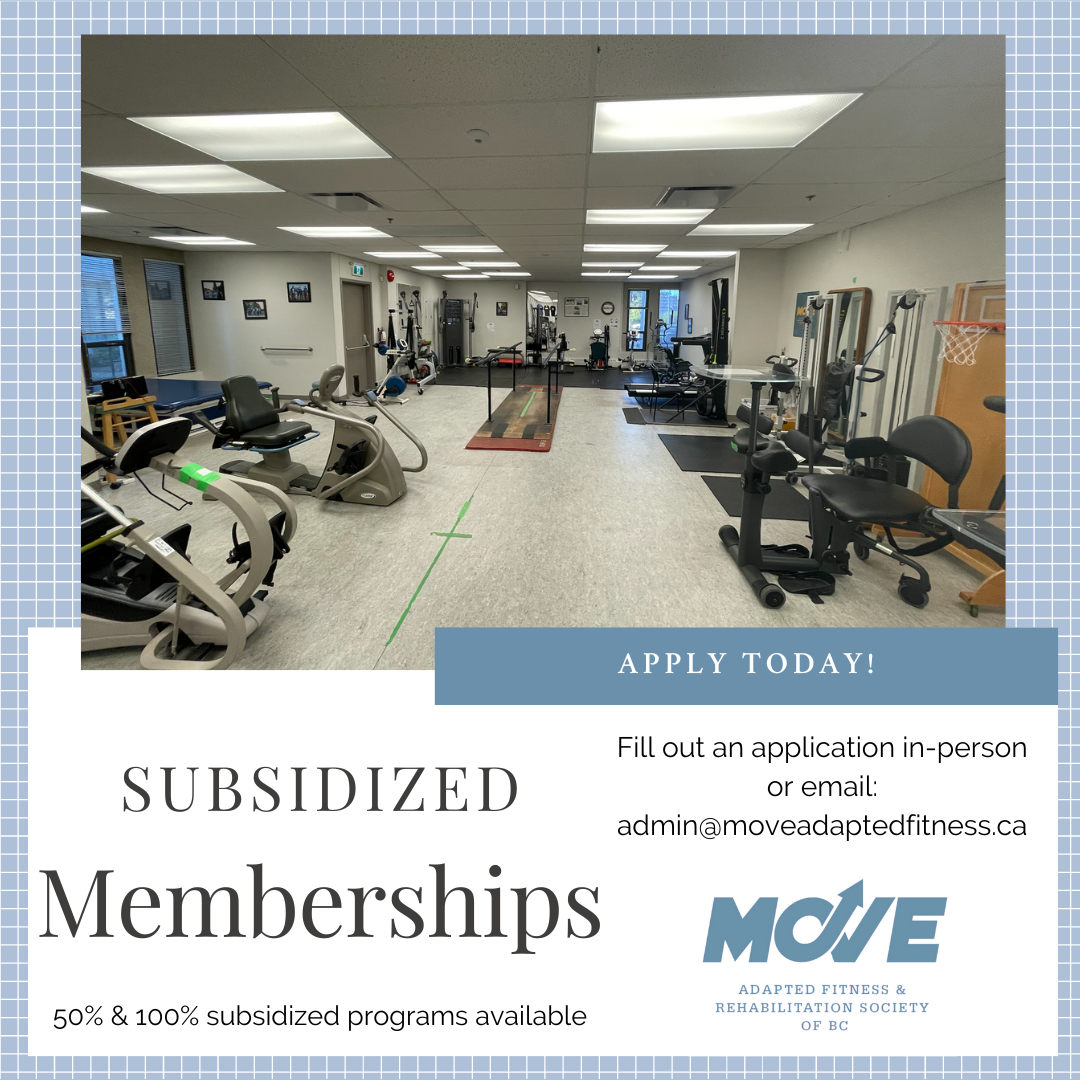
Thanks to our sponsors, MOVE is able to provide members with subsidized options when it comes to both memberships and 1-on-1 therapy sessions. Our subsidized programs provide members with financial help to continue encouraging them to reach their exercise goals!

If you, or someone you know, might be interested in our subsidy program, please reach out to our front desk for more information!

Spring Brake 2023

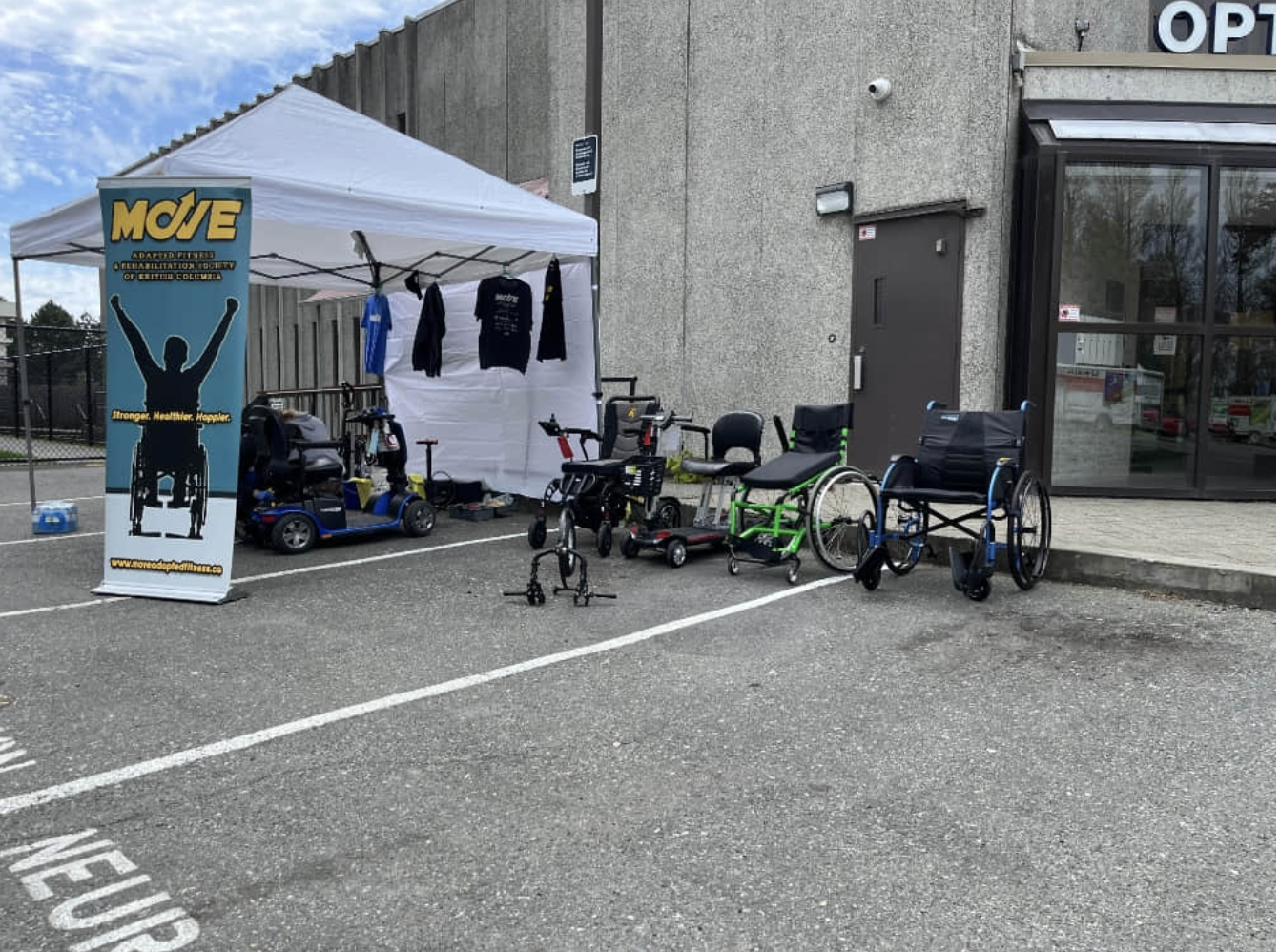
On April 30th, MOVE hosted its Spring Brake annual fundraiser to assist community members with minor repairs and cleaning of their mobility aids. This year the funds raised will help expand our subsidy programs.

City Wide Scooters came and showed some new innovative mobility equipment at MOVE Fitness and Rehabilitation Society. Home Medical Equipment (HME) also joined us and provided information regarding their services! Thank you City Wide Scooters and HME!!

Check out both of their websites and https://citywidescooters.ca and https://www.hmebc.com/.

MOVE At Home with Iva!

MOVE At Home anytime!


A 30-minute seated workout

all from the comfort of your own home.


Before you get started it is important to warm up. Here is what we recommend:

  • Neck rolls (slowly looking up and down) for 5 counts per side - total of 10 counts

  • Neck rolls (slowly looking left and right) for 5 counts per side - total of 10 counts

  • Neck rolls (slowly bring your ear to your shoulder) for 5 counts per side - total of 10 counts

  • Neck roll (slowly rotate your head clockwise motion) for 5 counts

  • Neck roll (slowly rotate your head counter-clockwise motion) for 5 counts

  • Wrist rolls (rotate both wrists together in a clockwise motion) for 10 counts

  • Wrist rolls (rotate both wrists together in a counter-clockwise motion) for 10 counts

  • Reach right arm up as high as possible and slightly bend your core in opening up your right side for 10 counts

  • Reach left arm up as high as possible and slightly bend your core in opening up your left side for 10 counts


After your workout, it is important to cool down. Here is what we recommend:

  • Arm circles ( stretch both arms out in a ‘T’ position and create big circles in a clockwise motion) for 10 counts

  • Arm circles ( stretch both arms out in a ‘T’ position and create big circles in a counter-clockwise motion) for 10 counts

  • Dropping both arms down to your side, raise your shoulders up to your ears as much as possible, hold for 3 counts and then release and repeat 5 times.

  • Continue to rest your arms to your side and roll your shoulders forward for 5 counts

  • Repeat this motion but rotate the motion backwards for 5 counts

  • Bring your right arm horizontally across your chest and support your arm with your left arm. Hold this stretch for 5 counts

  • Bring your right arm horizontally across your chest and support your arm with your left arm. Hold this stretch for 5 counts

  • Stretch your hamstrings out by straightening your left leg out in front of you and flexing your foot (toes to the sky) Depending on your flexibility, leaning your upper body toward your knee will enhance this stretch. Hold for 10 counts and repeat with the opposite leg.

  • Finish off with 3 big breaths. With each breath in, raise both arms out to the side and up the sky, hold for 3 counts and then on your breath rout, lower the arms back to your side.

Interested in joining our LIVE MOVE At Home classes?

WHEN? Every Tuesday & Thursday @10-10:45am

WHAT? An online, chair based, group fitness class with no equipment required.

WHO? Everyone! Exercises can be adapted to all skill levels and abilities.

HOW MUCH? Free!

REGISTRATION? [email protected]

Move The Distance is now over, thank you to everyone that registered and donated!!

MOVE The Distance is a virtual event and will take place from August 29 - September 18. Participant's will choose the distance they wish to complete over a three week period. Participant's will run, walk, cycle, roll, or row either an 8km, a half marathon (21.1km), or a full marathon (42.2). Additionally, participants are welcome to join forces with others in order to complete their chosen distance as a relay. Each distance has three tiers of registration. Tier 1 includes entry with a water bottle. Tier 2 includes entry with a hoodie. Tier 3 includes entry with a hoodie and water bottle!

As a result of your support, our members have access to a safe and supportive space to move their bodies, reach their mobility goals, and become part of a community. Specifically, your donation goes directly toward assisting individuals with disabilities engage in regular physical activity and exercise, thereby improving both their physical and mental health and wellness.

A Place To Rest: Guided Relaxation - First installment

“A Place to Rest” is a Restorative Yoga series by one of our volunteers. This first installment is a simple guided relaxation. Find a quiet, comfortable place to listen.

It can be listened to during the day, anytime you feel you need to relax, or at night to help you fall asleep. Repeated listening will help reduce chronic pain, spasticity, and fatigue. Relax and Enjoy!

Song credit: Title - Ra Ma Da Sa Artist: Snatam Kaur


How Music Impacts Your Workout!

How music impacts your workout!

By Marissa Hoen

Have you found yourself tapping your foot or jiggling your shoulders when a good song comes on? Do you ever feel down, but when your favorite song comes on your mood immediately lifts and your mind is shifted to that sweet tune? To me, music is one of the best aspects of life and it completely changes my mindset (whether that be for the better or for the worse!). When I stumbled across this article by Alice Oglethorp, I thought it would be great to share with all of you! In her article, “5 unexpected ways music improves your workout”, she highlights some research showing that music can:

1.    Increase your speed

2.    Increase your power

3.    Make exercise feel easier

4.    Enhance your mood

5.    Keep you motivated


She also explains how to choose the best workout music for your specific workout. Check out her article for more info- link is in the references below!

In our gym at MOVE, I’ve noticed there are other benefits:

●     Gets people moving between sets (In essence keeps you moving for longer). I know it’s not only me that dances to the music when a really good song comes on. Any movement is better than no movement, and dance is a fantastic way to keep moving!

●     Connects us. Music has been a spur of conversation this week and has shown us that many of us have similar tastes- and some of us very different. No matter what music you listen to, talking about music and enjoying it together makes us feel more connected.

●      Gives a rhythm to your movement. Whether or not you are aware, some folks in the gym tend to exercise to the beat. This gives the body different demands depending on the rate of the beat!

This past month, we took a MOVE member music poll. Out of 34 members surveyed, here are the results:


It looks like most of those surveyed love ROCK music, with a close runner up being ALL music! Wow, you all aren’t too picky! One person I surveyed replied “80’s music”, so I put that in with the Pop lovers. I know there might be debates on this, but most of the 80’s music we listen to in MOVE is good ol’ pop.

Next time you come into the gym, try to notice how the music impacts your moves. Maybe request a new station or put on some headphones and rock to your favorite tunes.

References

Oglethorpe, A., (2020, December 10). 5 unexpected ways music improves your workout. Fitbit Blog. Retrieved June 7, 2022, from https://blog.fitbit.com/workout-music/

Image taken from: unsplash-image-pH88tHG-1yw.jpg

Guided Meditation 101

Why you should try guided meditations

By Marissa Hoen

No matter who you are- dog, plant, or human- your environment impacts your life. As humans, we have the ability to make decisions about how we interact with our immediate environments (like choosing what we eat, if we exercise, if we drink water) and how we change our environments (getting a new pillow, cleaning your room, moving to a new city).

While changing environments looks different for everyone, altering what we consume is within reach. I’m not just talking about what we eat and drink (though this is very important!), but everything we are exposed to eventually enters the mind or body. I’m talking about what you watch on netflix, the news articles you read, the advertisements that play in the background between songs on youtube- in addition to the thoughts you think and the words that you speak about yourself. All of these ideas and images are recorded somewhere in you, whether it is short or long lived. 


There are many factors of our environment that we can’t control- like weather, other people’s behaviors, taxes- so why not change what we can control? Why not change what we choose to consume? Even if it’s only for 5 minutes of the day.


If you have tried meditation before, but have found it too difficult to stick to it because of a very active mind- give guided meditation a try! A guided meditation is simply an audio file or video of someone talking you through a meditation. There might be music, nature sounds, or silence with occasional speaking. The mediations may have specific themes for you to focus on such as gratitude, confidence, and motivation. Others may be more instructional, and teach breathing techniques for stronger respiratory muscles, pain management, or overall relaxation.


5 reasons why you should try guided meditations:

  1. Great for beginners! If you aren’t sure how to go about meditating, find a guide to talk you through it.

  2. Helps to quiet an active mind. Whether you are going through a stressful event, dealing with anxiety, or simply have a little more mental chatter that day, guided meditation can give you something positive to focus your mind on.

  3. Learn new breathing techniques. Some of us spend a fair bit of the day breathing with the upper chest/neck instead of taking a full diaphragm breath, which can lead to pain or discomfort in the neck muscles and potentially headaches. Breathing using the diaphragm can help reduce the work needed by your neck muscles and help you feel more relaxed.

  4. Feel the way you want to feel; think the way you want to think. By choosing a guided meditation focused on gratitude for example, the meditation instructor will speak words that will help you focus on the good in your life. So at least in that moment, you are able to feel and think in a way that supports your wellbeing- cleaning up your internal environment.

  5. They are free! With access to the internet, there is an endless stream of guided meditations ready to go at any time. I’ve linked some of my favorites below. 


Not sure where to start? Try these:


Caution:

  • As someone who has listened to countless guided meditations, I can tell you that not all meditation coaches are good! There is some trial and error in finding meditation videos/audio that you will actually enjoy. I’ve spent a good amount of time sitting there and cracking up at the word choice, the voices, or the breathing in these videos- so keep searching and you will find your person!

Hot or Cold Therapy for Muscle Injury?

Written by Marissa Hoen | January 26 2022


Yesterday I woke up a bit stiffer than usual, some of my muscles still feeling the tension of the workout from the day before. I stood up and quickly stretched when suddenly I felt it- a twinge of pain from a muscle in my low back (the QL to be specific!). The pain was sharp, intense, and left my oversensitive muscle in great tension. At this moment I was experiencing two types of muscle pain: pain caused by a low back muscular strain, and DOMS (delayed-onset muscle soreness) from my workout the day before.

I was in pain but not quite ready to take medications, and wanted to use heat or cold to help the pain and hopefully help with healing. My instinct was to reach for the heating pad, which did help to decrease the pain for a bit- but let’s take a look at what the research recommends!


HEAT vs COLD: what are the effects on the body?
(Malanga, Yan, & Stark, 2015)


*Note muscle spasms are not reduced in all individuals who use cold therapies.


Heat VS Cold: which is better at pain relief?


The jury is still not out on this one! Authors on this topic point to the need for more high quality studies as the evidence is not convincing enough one way or the other! (Wang et al, 2021; Malanga, Yan, & Stark, 2015). Even though we can’t yet claim cold is ‘better’ than heat (or vice versa), I can get behind this general rule that Malanga, Yan, & Stark suggest in their paper:

The classic method of icing an acute muscular injury has been consistently shown to reduce pain, and may be a better choice in the first 2-3 days of injury as heat can increase heat and swelling in the area. 72 hours after injury, cold therapies may not be as beneficial.


Takeaways:


What do these somewhat inconclusive studies tell us? First we need more studies on the topic to find which method works better. But in the meantime- we need to figure it out for ourselves! Personally, I love using alternating heat and cold for my sore or strained muscles. If you have a condition that has altered the sensation of your skin, use an extra layer over the heat or cold application to avoid burning or freezing your tissue! 


Quick note about material flow:

If I had moved more slowly into the stretch in the morning, I could have avoided that muscle strain. Muscles, tendons, ligaments, bones are all made of both a water component and material components. When moving quickly, the water doesn’t have enough time to flow in the tissue, so the stiffer the tissue (in this case muscle) will be. When we move more slowly, we allow time for flow and the muscle is more pliable. So especially when you wake up, take time to move a bit more slowly to allow muscles to warm up and hopefully you can avoid this injury!


References


Malanga, G. A., Yan, N., & Stark, J. (2015). Mechanisms and efficacy of heat and cold therapies for musculoskeletal injury. Postgraduate Medicine, 127(1), 57-65. https://doi.org/10.1080/00325481.2015.992719


Wang, Y., Li, S., Zhang, Y., Chen, Y., Yan, F., Han, L., & Ma, Y. (2021). Heat and cold therapy reduce pain in patients with delayed onset muscle soreness: A systematic review and meta-analysis of 32 randomized controlled trials. Physical Therapy in Sport, 48, 177-187. https://doi.org/10.1016/j.ptsp.2021.01.004

Image credit: https://www.livingcentreclinic.com/pain-relief-choosing-hot-or-cold/

Strategies for a Happier Holiday Season

Written by Marissa Hoen | December 14 2021

For so many of us, the holiday season can be an emotional time. This is our second winter dealing with the restrictions of the coronavirus, limiting our options to spend time with family and friends. On top of that, some of us experience seasonal affective disorder, or SAD, which doesn’t help us stay positive through the gray Victoria days. All right, now that the doom and gloom is out there- let’s shift our focus. Let’s launch into the middle of December with strategies to keep our hearts happier- let’s focus on the things we CAN change. 

Tips to take home:

  • Stay Active. If you are already feeling down, this one can be difficult to start but you won’t regret it. With MOVE closing for holiday break, you will need to be a bit more creative by exercising at home or while out and about. When I’m feeling down and don’t want to move my body, I tell myself I will only do 5 minutes of whatever movement I actually enjoy. Once I get moving I find more often than not, I end up exercising for longer than planned and almost always feel better than when I started. Another option is to follow a guided YouTube workout so you don’t overthink it!


  • Spend time with those you love. Whether it’s on a phone call or at the mall, the people you love will help you through. I like to combine family time and movement by doing yoga sessions with my Dad via Zoom. Even though he’s thousands of miles away, we can connect, laugh, and get a great workout done together.


  • Book an appointment. During winter, my motivation is at an all time low- so I don’t depend on it to get things done! Instead, I will proactively book appointments to ensure I am not spending all of the winter season alone. These appointments might be counseling/therapy, massage, light therapy (which I’ll talk more about in the next tip), a ticket to Butchart gardens to see the Christmas Lights- anything experience that sparks some excitement should be plopped in the calendar to give you something to look forward to.

  • Light therapy. For those who experience seasonal affective disorder, a type of depression “with a seasonal pattern, typically occurring in the autumn and winter with remission in the spring or summer” (Kurlansik & Ibay, 2012), light therapy may be right for you. A study comparing 30 minutes a day of white light therapy to antidepressant medication (fluoxetine) found that both were effective at reducing depressive symptoms, and light therapy resulted in quicker improvements.  As an alternative to clinical light therapy, I recommend getting outside into the sun whenever it chooses to emerge!

  • Practice Gratitude. This may sound a little hippy for those who have never tried it, but simply shifting your attention to all the things you are grateful for is a quick and effective way to feel more positive no matter the season. In this world we are constantly reminded of the negatives that surround us, making it all too easy to ruminate and fall into a negative thought spiral. Take a moment, take a breath, write down or say out loud whatever you know you are grateful for. Repeat it again and again until you really feel that sense of hope, the sense of calm and happiness- even if it’s just for a moment. I am grateful for you, whoever is reading this, for making it this far and for taking steps toward a happier winter. 

Wishing you and your loved ones the happiest of holidays!

References

Lam, R. W., Levitt, A. J., Levitan, R. D., Enns, M. W., Morehouse, R., Michalak, E. E., & Tam, E. M. (2006). The can-SAD study: A randomized controlled trial of the effectiveness of light therapy and fluoxetine in patients with winter seasonal affective disorder. The American Journal of Psychiatry, 163(5), 805-812. https://doi.org/10.1176/ajp.2006.163.5.805

Kurlansik, S. L., PhD, & Ibay, A. D., MD. (2012). Seasonal affective disorder. American Family Physician, 86(11), 1037-1041.

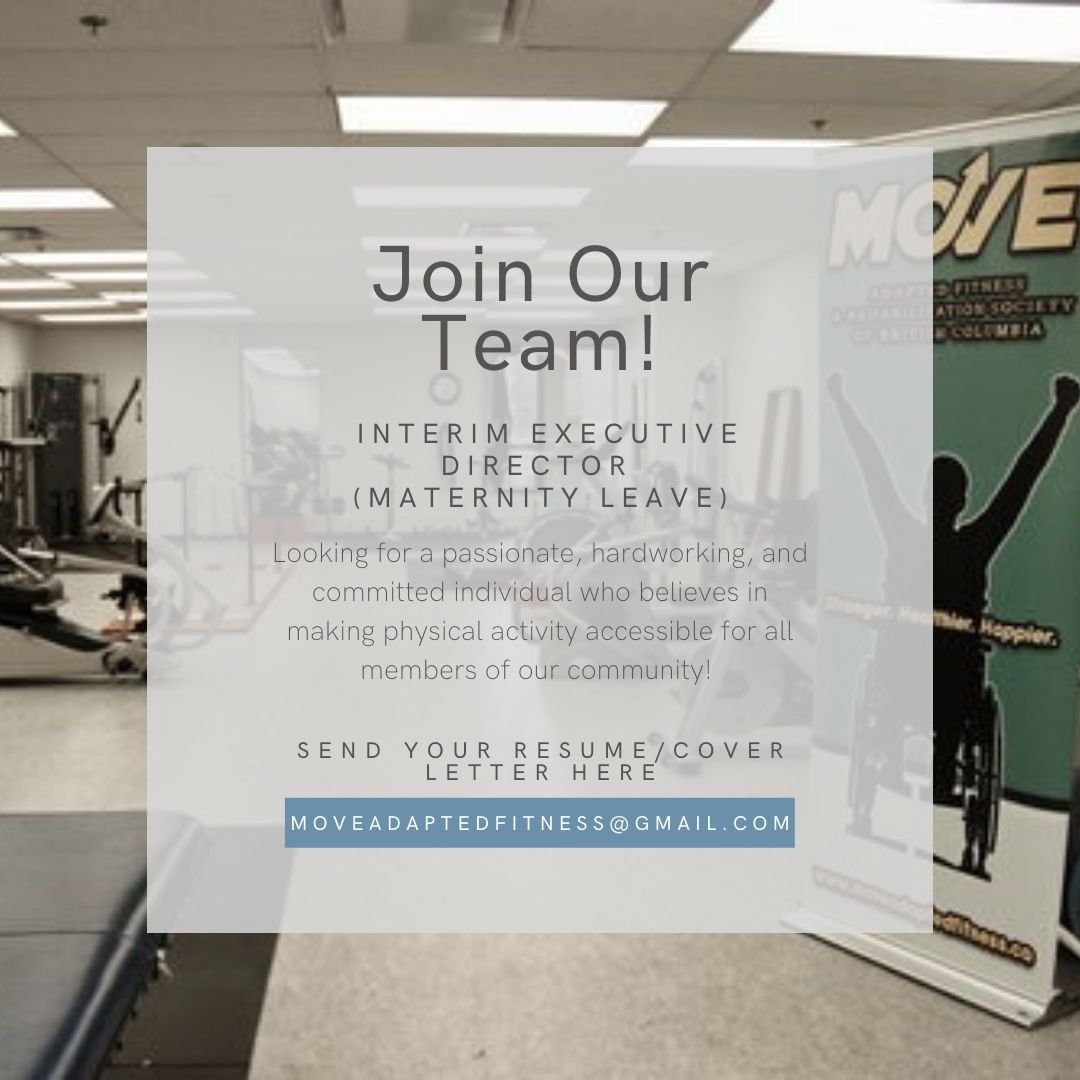
Join Our Team!

Job Opportunity: Interim Executive Director (Maternity Leave) 

Who We Are

MOVE Adapted Fitness & Rehabilitation is an independent registered non-profit society. Through our specialized adapted fitness centre, we provide adults and children with physical disabilities a safe and encouraging place to move their bodies, reach their mobility goals, and improve their quality of life. At MOVE we work with people of all abilities, including but not limited to: spinal cord injury, multiple sclerosis, Parkinson’s disease, brain injury, paralysis caused by stroke, heart attack, and more. MOVE aims to advance inclusion through all of its programs and services. Our programs are focused on eliminating physical and financial barriers that individuals living with disabilities encounter while seeking to engage in regular physical activity.  


Who You Are

As an individual you are engaging, personable, and genuinely interested in aiding others in achieving their fitness and wellness goals. You are a self-starter, well organized with excellent interpersonal and communication skills. You are able to establish and maintain working relationships effectively with all governing agencies, corporate sponsors, community members, and advisory committees. You possess strong leadership skills with the ability to apply them in different situations. You are resourceful with good initiative and possess the ability to work with minimal supervision. 


Duties and Responsibilities

  • Reporting to the board of directors with support from the board president and vice president, the interim ED will work in collaboration with advisory committees to develop, coordinate and deliver MOVEs programs and services.

  • Supervise and provide direction to staff responsible for all functions of MOVE such as: member recruitment, volunteer management, marketing, fundraising, grant writing, data management and community outreach. 

  • Communicate MOVEs vision and energize prospective, current donors and corporate sponsors.

  • Be a spokesperson for MOVE and represent its mission, programs and members to all other organizations and the public. 


Qualifications/ Relevant Experience

  • Bachelor’s degree in Kinesiology, Athletic Therapy or Exercise Science is required. 

  • Current certification as an Athletic Therapist, Kinesiologist or CSEP-CEP is required. 

  • Valid emergency first Aid and CPR-C certification is required. 

  • Experience with physical therapy, fitness, or personal training with individuals with physical disabilities is an asset. 

  • A minimum of 1-5 years experience in a management leadership position is preferred. 

  • Experience working in the nonprofit sector, specifically fundraising is an asset. 

  • Excellent written, oral and interpersonal communication skills. 

  • Computer literacy: Microsoft office/excel, JaneApp, donor and volunteer management software.

  • Effective problem solver, with the ability to think creatively and implement solutions.

  • Detail-oriented and able to work independently or collaboratively in a fast paced, multi- faceted environment.  

  • Demonstrated ability to foster a supportive, inclusive community for all of MOVEs members and volunteers.

Working Conditions

  • This is a 12 month term position.  

  • Schedule: Full-time 40 hours/ week, Monday-Friday.  A standard work week but may occasionally be required to work outside those hours to accommodate activities such as fundraising and marketing events.

  • Compensation: $25/hour plus 4% vacation pay on gross salary. 

  • Application deadline: January 14, 2022

  • Expected start date: February 14, 2022


Interested applicants are invited to submit their cover letter and resume via email to [email protected] (Attention Alannah Verville). We thank all applicants in advance for your interest, however, only those under consideration will be contacted.

Listening to your footsteps: The impact of hearing and vision loss on fall risk

Written by Marissa Hoen | November 17 2021


Falls are a part of life that most of us try to avoid. While children bounce back fairly quickly from a fall, older adults share a different story. The Public Health Agency of Canada reports that in those over 65, falls are the number one cause of hospitalization due to injury (2014)- but why is this the case? Body function is complex and the answer to this question is unlikely to be a single source. In a recent CBC article, Ruby Buiza  sheds light on some factors in fall risk that you may not have been aware of (2021).

In the article, Buiza points out 6 factors that impact fall risk:

  • Hearing and Vision Impairments

  • Improper handrail shape

  • Improper size of steps

  • Using well-fitted mobility aids 

  • Fear of falling

  • Medication side-effects

    Some of these factors, such as handrail shape and fear of falling, are modifiable in that we may be able to buy a new handrail and work on overcoming our fears; however, many of these factors might not be easily altered. In those cases, such as hearing impairments, improper step size and handrail shape, great attention and external support should be regularly used. Today let’s take a deeper dive into how hearing and vision can impact fall risk and focus on what we can change to live life with fewer falls. If you’d like to read the original CBC article, click the link in the reference section below!


    Hearing and Vision Challenges

    The positive correlation between visual impairments and fall risk is an easy one to understand: the less you can see, the more you may trip over obstacles in your path. Improving your vision can come in many forms. Maybe you finally book that eye exam and get those corrective lenses. In the CBC article, Barbara Kowalski points out that proper lighting provides immediate support- especially for those who get up at night (2021). In this case she recommends motion sensor lighting to eliminate that risky search for the light switch. While the link between vision and falls might be easier to wrap the brain around, the link between hearing and falls is less understood.

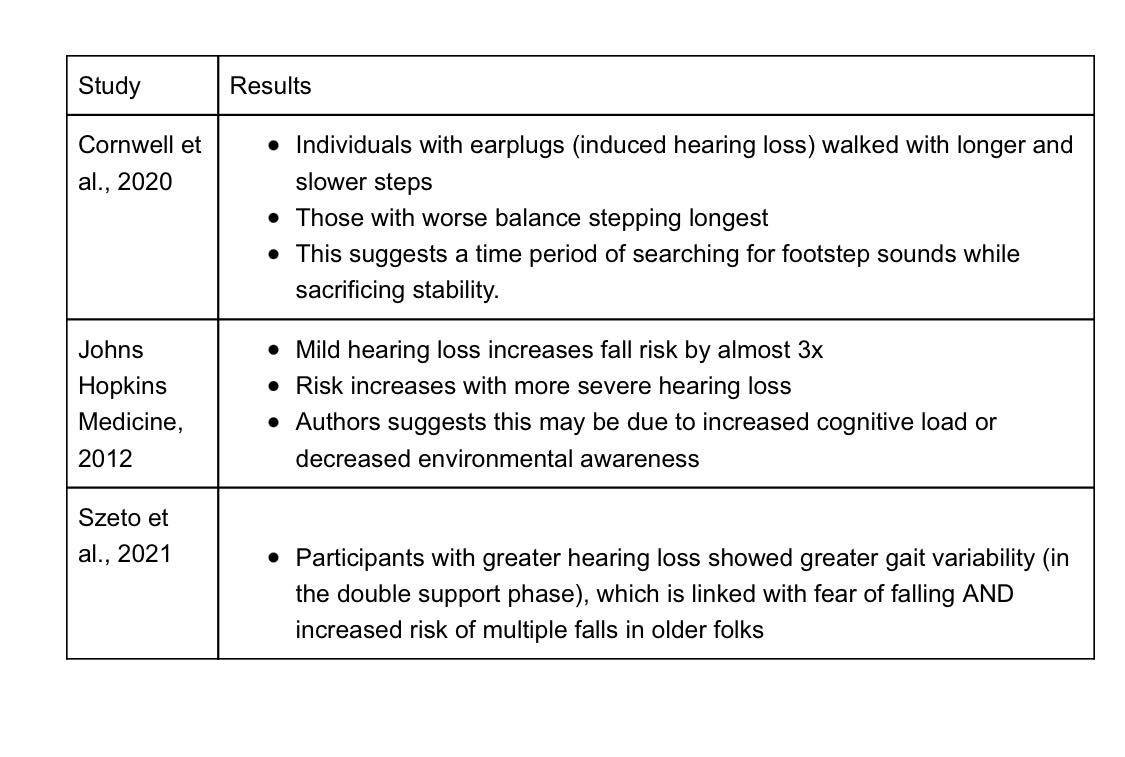
    Recent research shows that whether you can hear your footsteps has an effect on your walking gait (Cornwell et al., 2020), which ultimately impacts your fall risk. Here is a summary on some research findings:


So what can we take home from these studies?

  • If you have trouble balancing, take short distance steps to increase stability. Train larger distance steps when you have the support, take shorter steps when you don’t!

  • Realize that walking and balance take a lot of brain effort! If you are dealing with hearing loss or another condition that impacts your brain’s energy reserves, walking without falling takes focus and energy that you may not have in that moment. Take time to rest when needed, become more aware of your fatigue levels and don’t push it if you are alone. 

  • Pay attention during your movements! This ties in with the last point- if there is too much stimuli (noise, moving obstacles, etc) you may become distracted and unaware of your limb positioning. While this was not mentioned in the above studies, I have heard from many clients that falls happen when they just weren’t paying attention. However, attention takes energy and we know that falls are more likely when the energy is low.

  • Face your fears of falling through various methods. Since balance issues and fear of falling go hand in hand, working on one will simultaneously help the other. Find a safe space with support (ideally people and grip support), practice your balance and strengthen the muscles involved. Be aware of the fear and put strategies and solutions in place to minimize this fear- which will in turn improve your balance. Think about situations in which you have fallen in the past- are there any common stimuli? Take your experience and learn from it!

  • All of these risk factors are just that: risk factors. This does not mean that if you fall into one or more of these categories that you are going to fall. It does mean, however, that you are more likely to fall and should implement as many tools as possible to reduce your fall risk so that you can continue living your life the way you’d like. 


References


Buiza, R. (2021, October 16). 6 overlooked risks of falls for seniors and how to prevent them | CBC radio. CBCnews. Retrieved November 15, 2021, from https://www.cbc.ca/radio/whitecoat/6-overlooked-risks-of-falls-for-seniors-and-how-to-prevent-them-1.6202152

Cornwell, T., Cornwell, T., Woodward, J., Wu, M., Jackson, B., Souza, P., Siegel, J., Dhar, S., Gordon, K. E., & Gordon, K. E. (2020). Walking with ears: Altered auditory feedback impacts gait step length in older adults. Frontiers in Sports and Active Living, 2https://doi.org/10.3389/fspor.2020.00038


Hearing loss linked to three-fold risk of falling. Johns Hopkins Medicine. (2012, February 27). Retrieved November 15, 2021, from https://www.hopkinsmedicine.org/news/media/releases/hearing_loss_linked_to_three_fold_risk_of_falling  


Seniors’ falls in Canada. Public Health Agency of Canada. (2014). Retrieved November 17, 2021, from https://www.phac-aspc.gc.ca/seniors-aines/publications/public
/injury-blessure/seniors_falls-chutes_aines/assets/pdf/seniors_falls-chutes_aines-eng.pdf


Szeto, B., Zanotto, D., Lopez, E. M., Stafford, J. A., Nemer, J. S., Chambers, A. R., Agrawal, S. K., & Lalwani, A. K. (2021). Hearing loss is associated with increased variability in double support period in the elderly. Sensors (Basel, Switzerland), 21(1), 278. https://doi.org/10.3390/s21010278

The impact of nature on our health and wellbeing

Written by Marissa Hoen | September 24 2021

Take a moment, close your eyes and think about the last moment you spent in nature. What did it feel like, look like, smell like, or sound like? How does thinking about this place make you feel?

As I write this, I am sitting on a mossy bench in the middle of the Finnerty Gardens. The wind and squirrels shake the trees as leftover rain falls from each leaf. It smells like mud, wet grass, and faint sweet flowers. In this moment I feel calm, tranquil, and whole. 

In the past few weeks, life has gotten hectic. Juggling school, work, relationships, finances, and recovering from an injury- all while trying to improve my health and wellbeing- it's a challenge to say the least. No matter who you are, we all have responsibilities (whether it be kids to take care of or phone bills to pay) that we need to address in order to meet our basic needs. These basic needs, as proposed by Maslow, include physiological (food, water, warmth, rest) and safety needs (Maslow, 1943). Once those basic needs are met, Maslow suggests that humans are driven to fulfill their psychological needs, such as finding fulfilling relationships and increasing self-esteem. Based on some recent studies, I’d like to add one more need that may be psychological (though I feel it’s a basic need for myself!): time spent in nature.

A recent study surveyed over 20,000 people across the U.K. and compared their self-reported health and wellbeing with the number of minutes the participant spent in nature the week following the survey (White et al., 2019). The results may not surprise you! Those who spent 120 minutes or more in nature reported greater overall health and wellbeing

When I first read this study I thought: this is an association, there must be other variables at play... right? In order to get to the garden I am currently sitting in, I needed to walk here- there’s a variable! I know exercise increases health and wellbeing, so is this one explanation? Another study challenges my exercise hypothesis. Park et al. found that individuals sitting and engaging in Shinrin-yoku, or taking in the forest atmosphere, showed physiological changes related to improved health and wellbeing (2010). These changes include lowered blood pressure, lower heart rate, decreased cortisol release, and lowered sympathetic nerve activity. From this information, we can no longer assume that exercise is solely responsible for the findings in the study by White et al. 

What else does the 120 minutes in nature study teach us? White et al. points out that this improvement in health and wellbeing was reported if the time in nature was spread throughout the week or if it was just one day in nature, it just needed to total 2 hours or greater. They also described the time in nature as ‘recreational nature contact’, and defined the outdoors as “open spaces in and around towns and cities, including parks, canals and nature areas; the coast and beaches; and the countryside including farmland, woodland, hills and rivers… However this does not include: routine shopping trips or; time spent in your own garden.” (White et al., 2019).  They also found that this 120 minutes threshold was consistent regardless of season!

Takeaways: If you are human, you will likely feel health and wellbeing benefits by increasing your recreational time in nature. Take a survey of your last 7 days- how much leisure time did you spend outdoors? If it was less than 2 hours throughout the week, can you find ways to increase your nature time daily? Or maybe simply start with one day per week. Get outside, take a breath of fresh air, and feel the relaxation in the reminder that you are truly home!

References

  1. Maslow, A. H. (1943). A theory of human motivation. Psychological Review, 50(4), 370–396.
    https://doi.org/10.1037/h0054346

  2. Park, B.J., Tsunetsugu, Y., Kasetani, T. et al. The physiological effects of Shinrin-yoku (taking in the forest atmosphere or forest bathing): evidence from field experiments in 24 forests
    across Japan. Environ Health Prev Med 15, 18 (2010).
    https://doi.org/10.1007/s12199-009-0086-9

  3. White, M.P., Alcock, I., Grellier, J. et al. (2019). Spending at least 120 minutes a week in nature is associated with good health and wellbeing. Sci Rep 9, 7730.
    https://doi.org/10.1038/s41598-019-44097-3



Reduce the swell, support your cells! An Overview of Manual Lymphatic Drainage

https://breastbalm.com/lymphatic-drainage/

Written by Marissa Hoen | July 20 2021

What is the lymphatic system?

(Derrickson, 2017)

I like to think of the lymphatic system as the vascular system’s supportive best friend- always there to pick up the pieces, clear out the garbage, and give back what is needed. You may know that nutrients circulating in our arteries exit these vessels to supply all of our cells with nourishment. But how do these nutrients get to the cell? They diffuse through the interstitial space, or the space between cells. The fluid that holds these nutrients and proteins is called interstitial fluid, and in excess this fluid is referred to as swelling or edema. When reabsorbed by lymph vessels, this fluid again changes its name to lymphatic fluid, or lymph! 

In addition to reabsorbing excess edema, the lymphatic system plays a role in initiating immune responses and transporting lipids from the digestive system into the blood. This one way system requires pressure changes (through muscle contraction, gravity, breathing) to move lymph along the vessels. When damaged through systemic inflammation, certain diseases, and/or lymph node removal, certain areas of the system become inefficient and another route must be taken for the lymph to make it all the way back to the heart. That is where Manual Lymphatic Drainage comes in!

What is involved in Manual Lymph Drainage?

(Rattray & Ludwig, 2005)

  • Manual Lymphatic Drainage, or MLD, incorporates massage techniques aimed to pump lymph fluid away from areas of damage and into healthier, more effective lymph vessels

  • Techniques are mostly gentle, as large amounts of lymph vessels lie just below the skin

  • These techniques alternate between stretching and releasing the skin using palmar/fingertip stroking or circular kneading

  •  The techniques may be deeper in areas of more fibrous tissues (like scars) or around bony joints

  • Diaphragmatic breathing and abdominal massage are also involved to incorporate the deep lymph nodes

  • Usually treated in a supine position, but can be done seated, standing, or in side lying

  • MLD reduces edema (swelling) as well as pain and stress when done slowly and rhythmically

  • Uzkeser et al. (2015) found that complex decongestive physical therapy (CDT), which is the combination of manual lymphatic drainage, physical exercise, use of compression clothing, and skin care, is effective at reducing lymphedema in patients following a mastectomy. CDT is considered the gold standard treatment for lymphedema. 


Can I practice self MLD?

Stimulating lymphatic flow can be done by anyone, but before you begin read below to see if you are at risk for adverse effects. There are countless videos online demonstrating self MLD. My all time favorite technique is one that can be done anytime: diaphragmatic breathing with some added pressure: 

  1. Place your hands on your belly

  2. With an inhale let your belly expand with your hands giving a bit of resistance

  3. With an exhale let the belly relax and push gently into the abdomen

  4. Repeat for several breaths


Another great self MLD technique is dry brushing- which is exactly what it sounds like! Grab a dry brush that won’t irritate your skin and:

  1. Begin stimulating the lymph nodes of the neck and armpit area with circular brush strokes

  2. Move to the front of the hip, at the level of the hip crease 

  3. Then you can begin the rest of the body, brushing with straight strokes in the directions shown below. When brushing your arms and legs, begin at the top of the limb and make your way to the end (still brushing up toward the armpit). Complete the limb by brushing your way back up from bottom to top. 


Are there any potential risks with this treatment?

As this treatment may increase the return of blood flow to the heart, MLD for people with heart conditions such as congestive heart failure and cardiac insufficiency is contraindicated. Therapists should practice caution with those with systemic hypertension, as MLD may increase blood pressure. Esmer et al. (2019) found that in healthy participants, change in blood pressure varied depending on the area of body treated- for example neck MLD led to a reduction in blood pressure whereas abdominal MLD raised BP. The authors attributed some of these changes to the position of the body, so if you experience large fluctuations in blood pressure when you go from sitting to lying down (or vice versa), talk to your doctor or take caution before having MLD. 

Contraindications include:


(Rattray & Ludwig, 2005)

  • Chronic heart failure

  • Acute conditions (bacterial/fungal)

  • Recent Thrombosis

  • Edema due to Kidney dysfunction

  • Malignant Cancer


Precautions include:


(Wittlinger Lymphedema Clinic):

  • Edema following carcinoma treatment

  • Thyroid dysfunction 

  • Chronic inflammation

  • Bronchial asthma

  • Diabetes

Summary:

  • Manual Lymphatic Drainage is effective at reducing swelling/edema in many populations

  • You can receive MLD from a massage therapist, or at home with dry brushing, diaphragm breathing, and self massage

  • Those with heart conditions, acute infections, and chronic inflammation should consult their Doctor before receiving MLD


References


Derrickson, B. (2017). Human physiology. Wiley & Sons Inc. 

Esmer, M., Keser, I., Erer, D., & Kupeli, B. (2019). Acute cardiovascular responses to the application of manual lymphatic drainage in different body regions. Lymphatic Research and Biology, 17(3), 362-367. https://doi.org/10.1089/lrb.2018.0043

Manual Lymph Drainage (MLD) - contraindications. Wittlinger Lymphedema Clinic . (n.d.). https://www.lymphedema-clinic.com/manual-lymph-drainage/contraindications.html.  

Rattray, F. S., & Ludwig, L. (2005). Clinical massage therapy: understanding, assessing and treating over 70 conditions. Talus Incorporated. 

Uzkeser, H., Karatay, S., Erdemci, B., Koc, M., & Senel, K. (2015). Efficacy of manual lymphatic drainage and intermittent pneumatic compression pump use in the treatment of lymphedema after mastectomy: A randomized controlled trial. Breast Cancer (Tokyo, Japan), 22(3), 300-307. https://doi.org/10.1007/s12282-013-0481-3